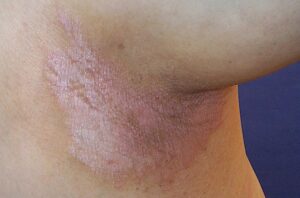
Non-Albicans Candida

Some of the most widespread fungal infections are members of the genus candida. Although several species of the genus candida, such as Candida albicans and Candida parapsilosis, are often found as part of the skin’s natural flora, they may cause devastating systemic infections in immunocompromised individuals. While Candida albicans infections are well-known, non-albicans candida, such as Candida parapsilosis and Candida tropicalis, is becoming a primary source of fungal infections in toenails.
Candida infections may also begin in immunocompetent hosts but are more common in immunocompromised hosts; this is why candidiasis is sometimes referred to as the “disease of diseased.” There is a decreased sensitivity to conventional antifungal medications in several Candida species other than C. albicans. Signs of C. parapsilosis onychomycosis include yellowing, thickening, and fragmentation of the nail plate and extensive deformation of the nail fold.
Some infected individuals with C. tropicalis were also seen as vertical nail ridges and a blue-green discoloration on the end of the nails with subungual caseous debris. Very likely, C. parapsilosis colonizes the nail bed and surface easily but only invades the nail and nail bed in response to risk factors such as systemic illness, nail disease, or trauma.