
Ulcer
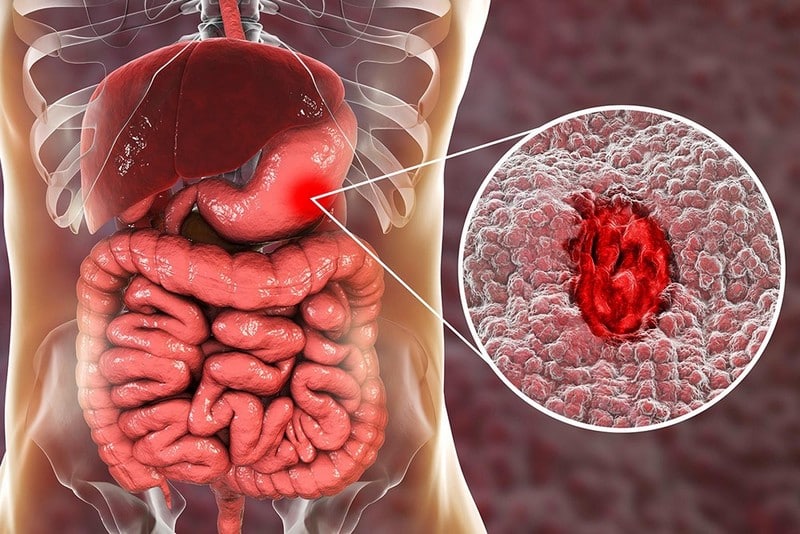
An ulcer is an open and painful sore that develops on the stomach lining and is caused by an infection of Helicobacter pylori (H. pylori), a bacterium, or from taking anti-inflammatory medicines, such as aspirin and ibuprofen. The most common symptoms of ulcers are vomiting, dark blood stools, difficulty breathing, fainting sensation, unexplained weight loss, changes in appetite, and nausea.
An ulcer is caused by the buildup of acid in the gastrointestinal tract that eats the inner surface of the gut or small intestine. As the mucous layer of the digestive tract is reduced due to the huge amount of acid, the probability of acquiring an ulcer will increase.
Nausea usually occurs after eating an especially huge amount of food. This is because the stomach cannot digest the food due to the acid buildup in the digestive tract. It can also occur in the early morning or when the body goes without food for a long time.
Ulcers cause inflammatory responses that trigger stomach contractions. As a result, the patient may experience severe nausea and vomiting when this symptom occurs and gets stronger.