Rhubarb
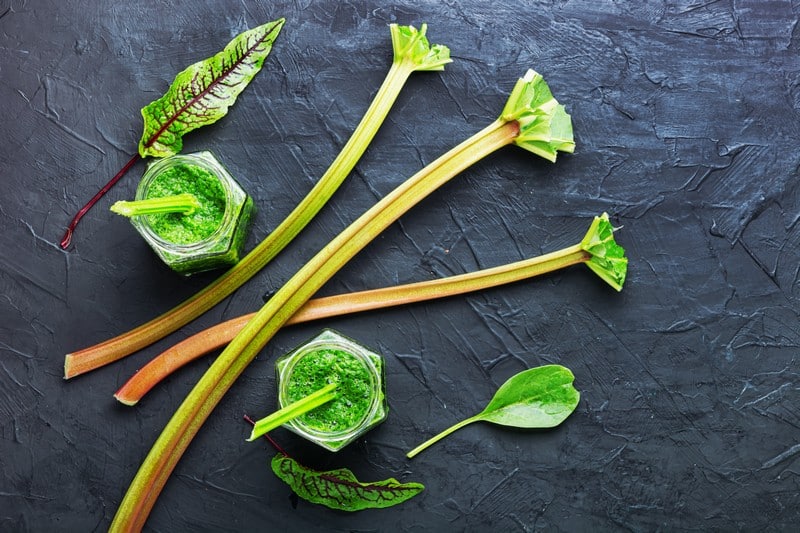
Rhubarb refers to the vegetable used like fruit for recipes and cooking. While it’s more common in Asian countries, it also grows in many places, including the US. It has a storied history in medicine, with roots going back to ancient China. It was also used in ancient Roman and Greek civilizations. It offers many health benefits, such as being an excellent vitamin K and A source. It also improves bone and heart health, aids digestion, and potentially prevents cancer, to name some examples.
It can also help reduce inflammation. When combined with its other medicinal properties, rhubarb may improve wound recovery. It’s also effective at treating conditions like fever blisters. Some studies suggest that it may even have the same level of efficacy as specific antiviral medications like acyclovir. However, a few things to look out for when using rhubarb. For example, it generally has a high content of calcium oxalate. Too much of this substance may lead to hyperoxaluria, increasing kidney failure risks.
The content of vitamin K found in rhubarb could interfere with medication like warfarin, reducing its efficacy. Therefore, it’s best to consult with a doctor, especially if the intended purpose is treatment.