Phototherapy
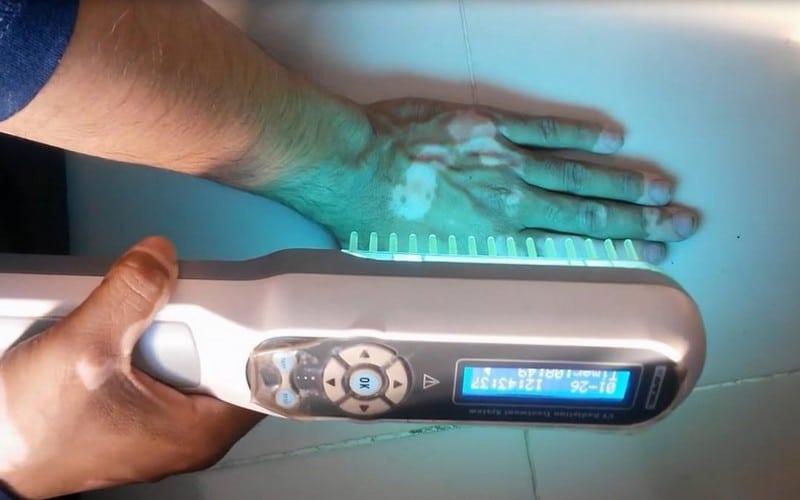
The most common treatment for vitiligo is phototherapy (also known as photochemotherapy), which uses ultraviolet light to stimulate pigment production in the skin.
How does this work? The natural skin color comes from melanin, a pigment produced by cells called melanocytes in the epidermis (the outermost layer of your skin). When ultraviolet light hits the skin, it triggers melanocytes to produce more melanin, thus darkening your skin. In people with vitiligo, this process doesn’t happen normally. Instead, it is reversed—unlike in albinism, the melanocytes produce little or no melanin and the resulting pigment loss results in white patches on the skin. So, phototherapy uses UV light to trick your body into thinking it needs to produce more melanin and pigment in your skin.
The downside of this treatment is that it can’t be performed at home—it requires going to an office every day for several weeks. However, most patients find it worth the trouble because the results are generally permanent and fairly fast-acting (depending on the patient’s skin and the severity of their vitiligo).