Corneal Arcus
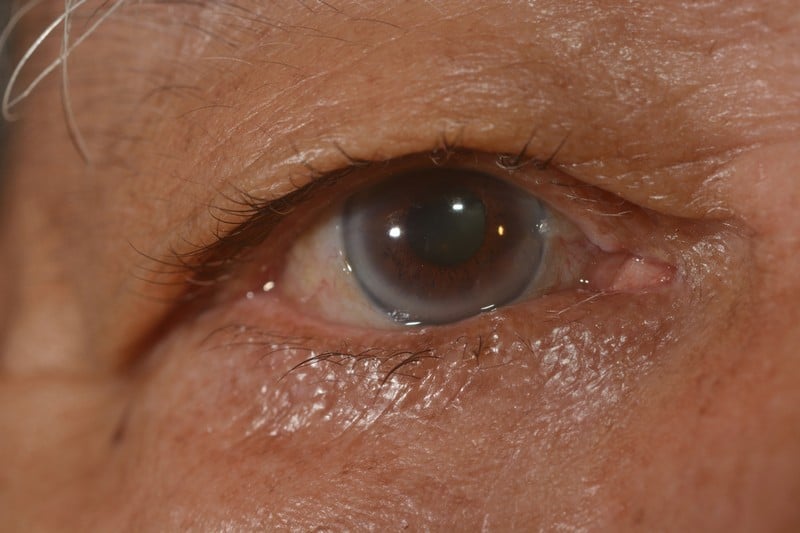
Arcus senilis or corneal arcus is a white or gray arc visible below and above the outer part of the cornea. The cornea is the domelike, clear coving over the eye’s front. This arc could later become a complete ring around the iris.
Older adults usually have corneal arcus caused by lipid (fat) deposits in the cornea’s outer edge. It will not affect a person’s vision and does not need treatment. In adults, the appearance of corneal arcus is not linked to high cholesterol. But, if a younger person develops corneal arcus around their iris, it is an indication of high triglycerides and high cholesterol levels. It could be inherited, passed down through generations, called familial hyperlipidemia. If this is the case, the arc appears before the person is 45 years old, which, according to healthcare providers, could lead to heart disease.
In most seniors, corneal arcus is a condition where a deposit of triglycerides, phospholipids, and cholesterol forms an arc on the top or bottom of the iris. The color varies so that people can have a yellowish, blue, gray, or white outline on the cornea. Rudolf Virchow, a pathologist, discovered it in 1852.
The corneal arc typically starts developing in about 60 percent of older people around the age of 50 or 60. The percentage rises to almost 100 percent in seniors aged 80.